Listen to this article
The automotive retail industry is undergoing a significant transformation. Car dealerships face increasing competition from online marketplaces, shifting consumer behaviors, and rising customer acquisition costs. In this evolving landscape, a well-structured marketing plan powered by artificial intelligence can help dealerships attract qualified leads, nurture prospects effectively, and build lasting customer relationships. This guide walks you through the essential steps to build a data-driven car dealership marketing plan using AI.
Why Car Dealerships Need a Structured Marketing Plan
Many dealerships operate without a formal marketing strategy, relying instead on sporadic advertising and seasonal promotions. This reactive approach often leads to inconsistent results and wasted marketing spend. A structured marketing plan provides the strategic foundation needed to compete effectively in today's digital-first automotive market.
According to industry research, car buyers now spend an average of 14 hours researching online before visiting a dealership. This shift means your digital presence and marketing touchpoints must work harder than ever to capture attention and build trust before a potential customer ever steps foot on your lot.
Understanding the Car Dealership Marketing Funnel
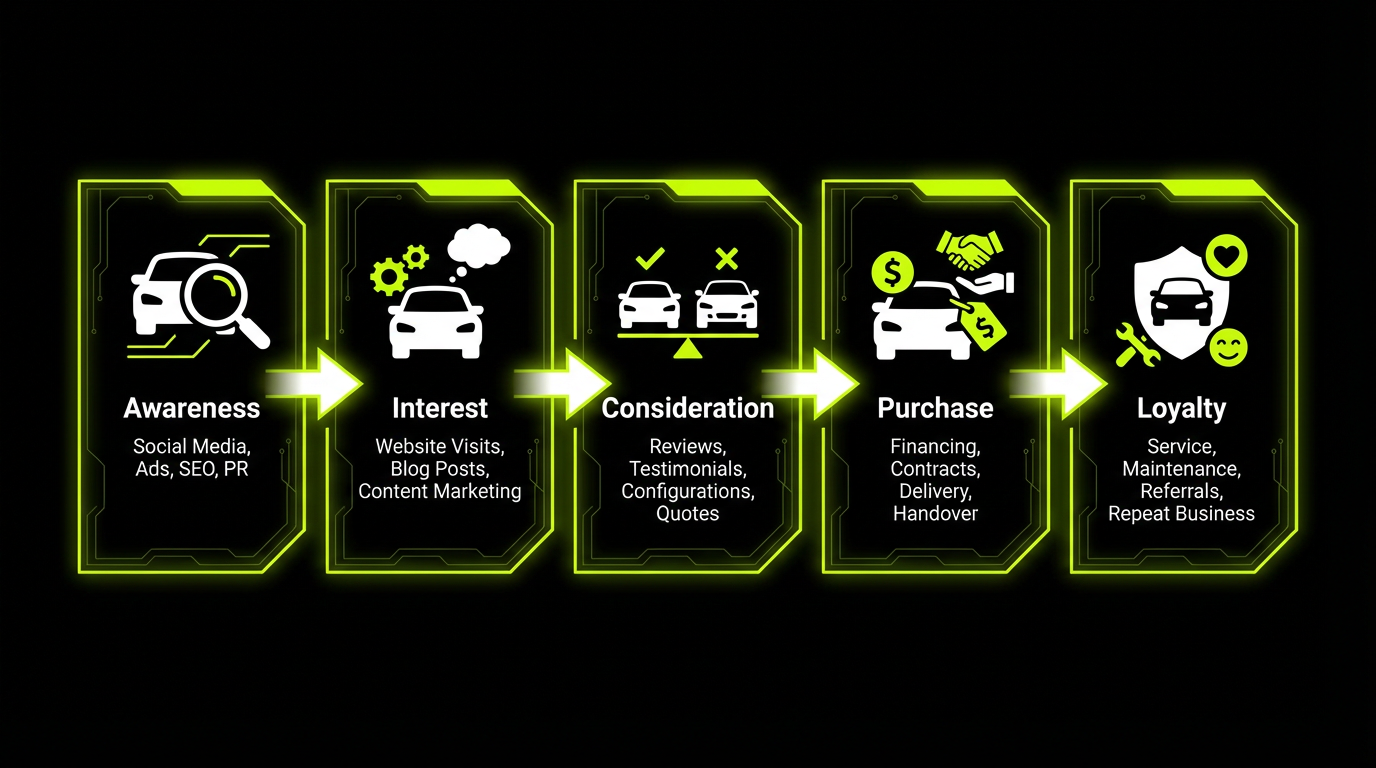
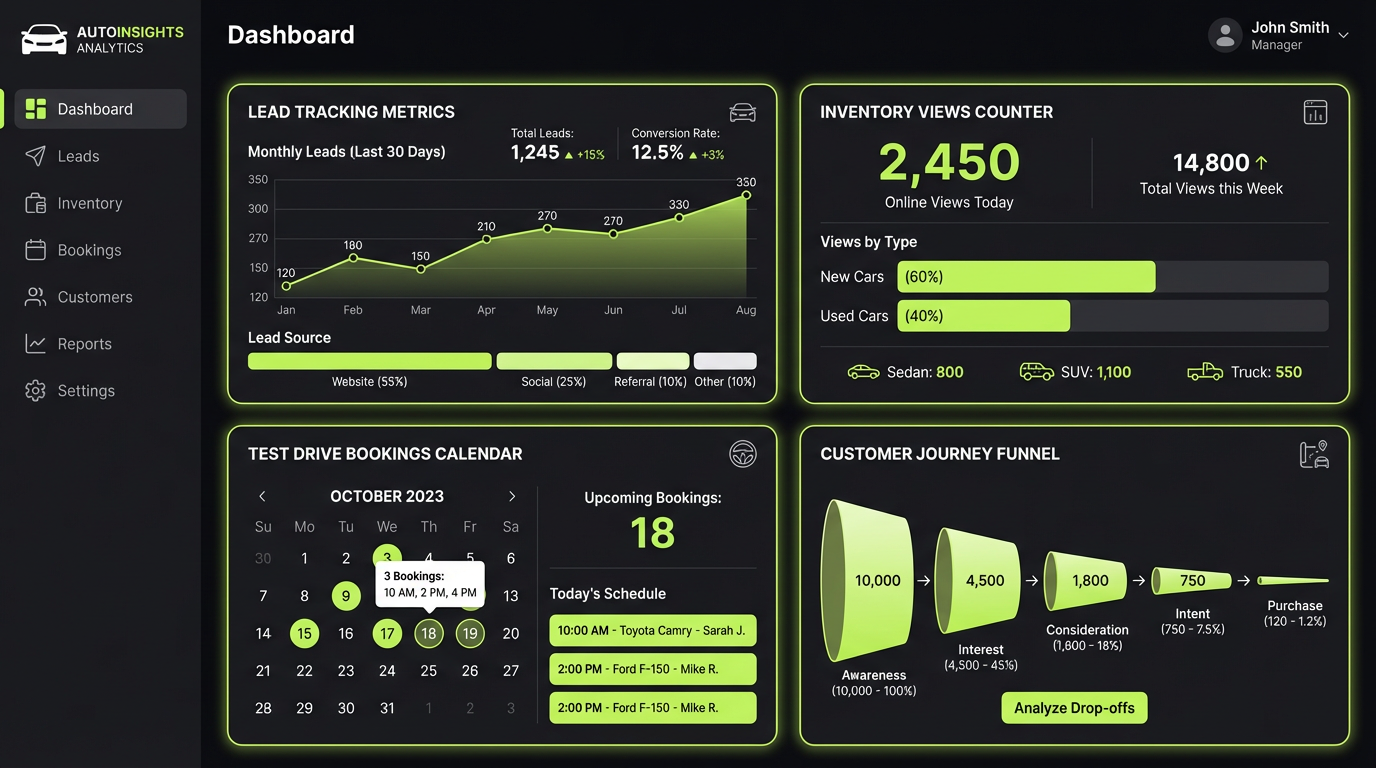
Before diving into AI-powered strategies, it is essential to understand the customer journey in automotive retail. The dealership marketing funnel typically includes five stages, each requiring different marketing approaches and messaging.
Awareness Stage
At this stage, potential customers are just beginning to think about purchasing a vehicle. Your goal is to establish brand presence and capture attention through search engine optimization, social media advertising, and display campaigns. AI helps identify the right audience segments and optimal times to reach them based on browsing behavior and demographic data.
Interest and Consideration Stages
Once prospects are aware of your dealership, they begin comparing options. Content marketing, vehicle comparisons, virtual showroom tours, and educational resources help move them toward consideration. AI-powered personalization can deliver tailored content based on the specific vehicles and features each prospect has shown interest in.
Purchase and Loyalty Stages
Converting interested shoppers into buyers requires compelling offers, seamless scheduling for test drives, and responsive communication. After purchase, retention marketing—including service reminders, loyalty programs, and referral incentives—transforms one-time buyers into lifetime customers.
Key Components of an AI-Powered Dealership Marketing Plan
Building an effective marketing plan requires addressing several core components. AI enhances each of these areas by providing data-driven insights and automation capabilities that would be impossible to achieve manually.
Target Audience Definition
Understanding who your ideal customers are forms the foundation of your marketing strategy. AI analyzes your existing customer data to identify patterns and characteristics of your most valuable buyers. This includes demographics, geographic location, vehicle preferences, financing behavior, and purchase timing. With these insights, you can create detailed buyer personas that guide all marketing decisions.
Competitive Analysis
The automotive retail market is highly competitive. AI tools can monitor competitor pricing, inventory, promotions, and advertising strategies in real time. This intelligence helps you identify gaps in the market, differentiate your offerings, and respond quickly to competitive moves.
Channel Strategy
Modern car buyers interact with dealerships across multiple channels—search engines, social media, third-party automotive sites, email, and your website. AI helps determine which channels deliver the highest-quality leads for your specific market and inventory. It also optimizes budget allocation across channels based on performance data.
Implementing AI in Your Dealership Marketing
Artificial intelligence transforms dealership marketing from guesswork into a science. Here are the primary ways AI enhances automotive marketing effectiveness:
Predictive Lead Scoring
Not all leads are created equal. AI analyzes lead behavior—pages visited, time spent on vehicle detail pages, form submissions, and engagement patterns—to predict purchase likelihood. This allows your sales team to prioritize high-intent prospects and tailor their approach accordingly.
Dynamic Inventory Marketing
AI connects your inventory management system with your marketing campaigns. When specific vehicles sit on the lot longer than average, AI can automatically increase advertising for those units. Conversely, it reduces spend on fast-moving inventory to maximize overall margin and turn rate.
Personalized Customer Communications
Generic email blasts produce poor results. AI enables personalization at scale, tailoring messages based on individual preferences, browsing history, and stage in the buying journey. Whether someone is researching SUVs or ready to schedule a test drive, AI ensures they receive relevant, timely communications.
Automated Campaign Optimization
AI-powered advertising platforms continuously test ad variations, adjust bidding strategies, and refine audience targeting based on real-time performance data. This automation ensures your advertising budget works harder without requiring constant manual oversight.
Measuring Success: Key Performance Indicators
A marketing plan is only as good as your ability to measure results. Essential KPIs for dealership marketing include:
- Cost Per Lead: The average cost to acquire a qualified lead across all marketing channels.
- Lead-to-Appointment Rate: The percentage of leads that convert to scheduled test drives or consultations.
- Appointment-to-Sale Rate: How effectively your sales team converts appointments into purchases.
- Customer Acquisition Cost: Total marketing and sales cost to acquire each new customer.
- Customer Lifetime Value: The total revenue a customer generates over their relationship with your dealership, including service and repeat purchases.
- Return on Ad Spend: Revenue generated for every dollar spent on advertising.
Frequently Asked Questions
How much should a car dealership spend on marketing?
Industry benchmarks suggest dealerships allocate between 5-10% of gross revenue to marketing. However, the optimal budget depends on your market competitiveness, growth goals, and current brand awareness. AI-powered analysis can help determine the right investment level for your specific situation.
Which marketing channels work best for car dealerships?
Effective channels vary by market and target audience. Generally, search engine marketing, social media advertising (particularly Facebook and Instagram), and third-party automotive sites like AutoTrader and Cars.com deliver strong results. AI helps identify the optimal channel mix for your dealership.
How long does it take to see results from a new marketing plan?
Initial results from digital campaigns can appear within weeks, but building sustained lead flow typically takes 2-3 months. Brand awareness and SEO efforts require longer timeframes—often 6-12 months—to reach full effectiveness. AI accelerates results by optimizing campaigns faster than manual approaches.
Getting Started with Your AI-Powered Marketing Plan
Building an effective dealership marketing plan does not require a massive budget or in-house data science team. Modern AI-powered marketing platforms make sophisticated strategies accessible to dealerships of all sizes. Start by defining your goals, understanding your current performance baseline, and identifying the biggest opportunities for improvement.
Whether you manage a single-point dealership or a multi-location automotive group, AI-powered marketing planning provides the insights and automation needed to compete effectively. By combining industry best practices with data-driven optimization, you can build a marketing engine that consistently delivers qualified leads, improves conversion rates, and maximizes return on investment.
The automotive retail landscape will continue evolving, but dealerships that embrace AI-powered marketing will be best positioned to adapt and thrive. Start building your AI-enhanced marketing plan today to drive sustainable growth for your dealership.