Listen to this article
In the evolving landscape of B2B and B2C marketing, two terms often create confusion: demand generation and lead generation. While they work together to drive business growth, understanding their distinct roles—and how artificial intelligence can enhance both—is essential for any business looking to build a sustainable customer acquisition strategy. This guide breaks down the differences and explores practical ways AI marketing tools can transform your approach to attracting and converting customers.
What Is Demand Generation?
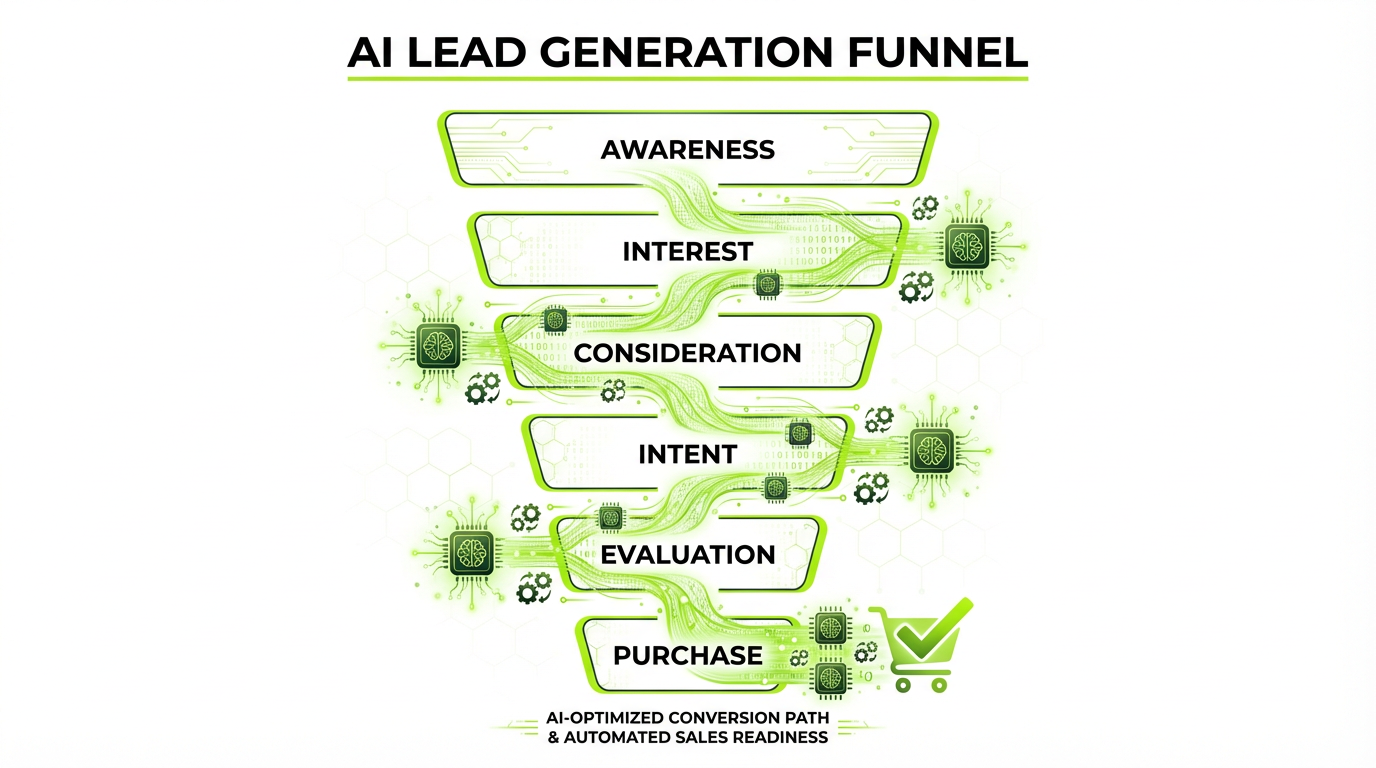
Demand generation encompasses all marketing activities focused on creating awareness and interest in your products or services. It operates at the top of the marketing funnel, targeting potential customers who may not yet know they have a problem your business can solve. The primary goal of demand generation is to educate your market, build brand authority, and create genuine interest that eventually leads to purchase consideration.
Common demand generation tactics include content marketing, social media engagement, thought leadership articles, webinars, podcasts, and public relations efforts. These activities focus on providing value to your audience without immediately asking for a sale or contact information. When done effectively, demand generation builds trust and positions your brand as a go-to resource in your industry.
What Is Lead Generation?
Lead generation is the process of capturing contact information from prospects who have shown interest in your offerings. It typically occurs in the middle to lower portions of the marketing funnel, where potential customers are actively researching solutions. Lead generation activities include gated content downloads, newsletter signups, demo requests, free trial registrations, and contact form submissions.
The key distinction is that lead generation requires an exchange—prospects provide their information in return for something of value. This creates a direct path for follow-up communication and moves prospects into your sales pipeline. Effective lead generation depends on strong demand generation efforts; without awareness and interest, there are no leads to capture.
How AI Transforms Demand Generation
Artificial intelligence is reshaping how businesses approach demand generation by enabling unprecedented levels of personalization, automation, and insight. Here are the primary ways AI enhances demand generation strategies:
Intelligent Content Creation and Optimization
AI-powered tools can analyze trending topics, search intent, and audience preferences to guide content strategy. These systems help marketers identify content gaps, suggest relevant topics, and optimize headlines and descriptions for better engagement. While human creativity remains essential, AI accelerates the research and optimization process, allowing marketing teams to produce more targeted content efficiently.
Predictive Audience Targeting
Machine learning algorithms analyze behavioral patterns to identify which audiences are most likely to engage with your brand. This enables more efficient ad spend allocation and helps marketers reach prospects who match their ideal customer profiles. Rather than casting a wide net, AI helps focus resources on high-potential segments, improving campaign efficiency.
Social Listening and Trend Detection
AI-powered social listening tools monitor conversations across platforms to identify emerging trends, sentiment shifts, and competitive movements. This real-time intelligence allows businesses to participate in relevant conversations, address potential issues proactively, and capitalize on trending topics that align with their expertise.
How AI Transforms Lead Generation
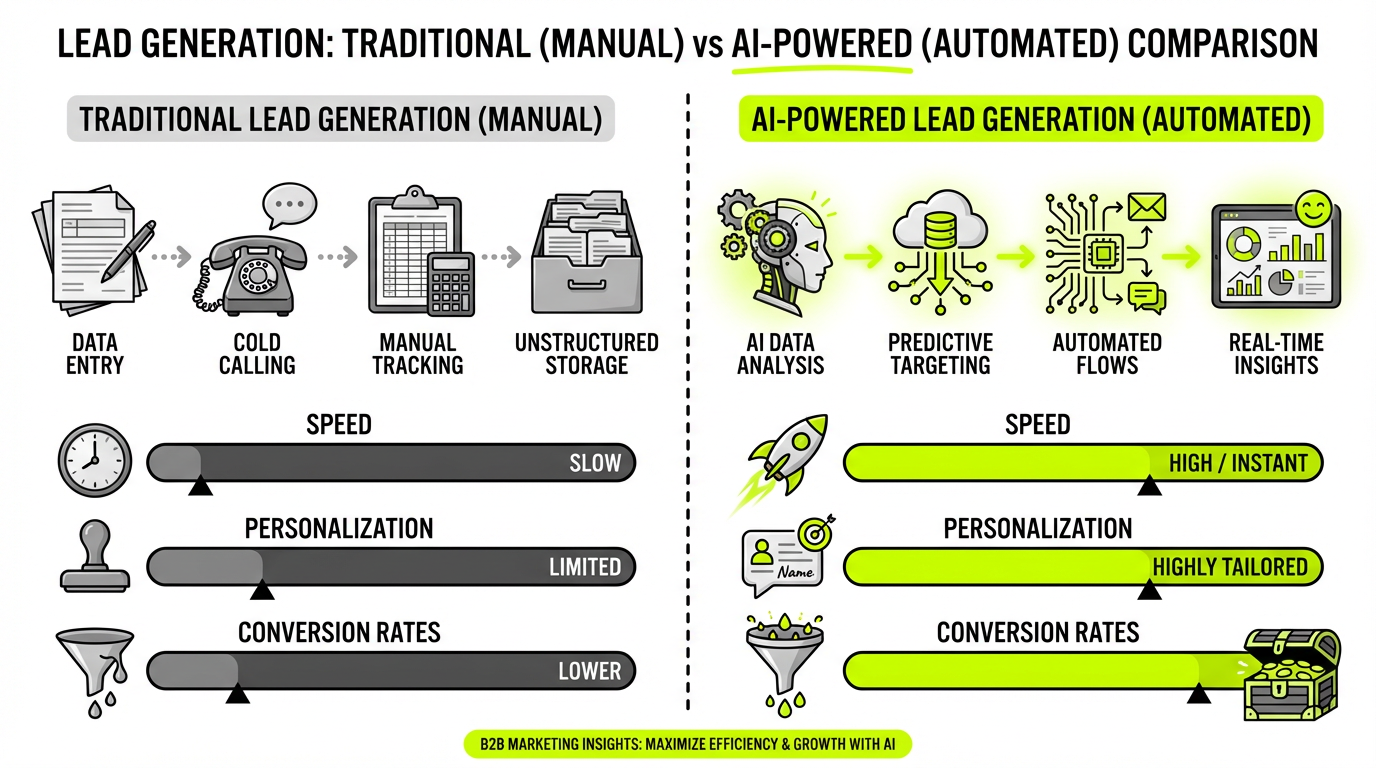
When it comes to lead generation, AI delivers measurable improvements in lead quality, conversion rates, and sales efficiency. The technology enables a more scientific approach to capturing and qualifying prospects.
Automated Lead Scoring and Qualification
Traditional lead scoring relies on manual criteria that may not reflect actual purchase intent. AI-powered lead scoring analyzes multiple data points—website behavior, email engagement, company information, and historical patterns—to predict which leads are most likely to convert. This helps sales teams prioritize their efforts and reduces time spent on unqualified prospects.
Conversational AI and Chatbots
AI chatbots engage website visitors around the clock, answering common questions and capturing lead information when interest is highest. Modern conversational AI can qualify leads through natural dialogue, schedule meetings, and route inquiries to appropriate team members. This immediate response capability significantly improves conversion rates compared to traditional form-based approaches.
Personalized Nurture Sequences
AI enables dynamic email sequences that adapt based on recipient behavior. Instead of sending the same emails to every lead, AI systems can adjust content, timing, and offers based on engagement patterns. This personalization helps maintain interest and moves leads through the funnel more effectively than static drip campaigns.
Building an AI-Powered Customer Acquisition Strategy
Implementing AI in your demand and lead generation efforts requires a thoughtful approach. Here are practical steps for businesses looking to leverage these technologies:
Start with Clear Objectives
Define what success looks like for your business. Are you focused on increasing brand awareness, generating more leads, improving lead quality, or shortening sales cycles? Clear objectives help you select the right AI tools and measure meaningful outcomes.
Audit Your Current Data
AI systems are only as good as the data they analyze. Review your existing customer data, website analytics, and marketing metrics. Identify gaps and establish processes for collecting the information AI tools need to deliver insights. Clean, organized data is the foundation of effective AI implementation.
Choose Appropriate Tools
The AI marketing landscape offers solutions ranging from comprehensive platforms to specialized tools. Consider your budget, technical resources, and specific needs when evaluating options. Many platforms offer AI features within existing marketing automation tools, providing a lower barrier to entry for businesses new to AI marketing.
Maintain Human Oversight
While AI can automate and optimize many marketing tasks, human judgment remains essential. Review AI-generated content, validate scoring models against actual outcomes, and ensure automated communications maintain your brand voice. The most effective approach combines AI efficiency with human creativity and strategic thinking.
Measuring AI Marketing Success
Tracking the right metrics helps you understand the impact of AI on your marketing efforts. For demand generation, monitor brand awareness indicators like search volume for branded terms, social engagement rates, and website traffic quality. For lead generation, focus on metrics such as lead volume, lead quality scores, conversion rates, cost per lead, and time-to-qualification.
Compare performance before and after AI implementation to quantify improvements. Remember that AI optimization is ongoing—continuous refinement based on results will improve performance over time.
The Future of AI in Customer Acquisition
As AI technology continues to advance, expect even greater integration across the customer journey. Predictive analytics will become more accurate, personalization will reach new levels of sophistication, and automation will handle increasingly complex marketing tasks. Businesses that develop AI capabilities now will be better positioned to adapt as these technologies evolve.
The key takeaway is that demand generation and lead generation, while distinct, work best when approached as complementary strategies. AI provides the tools to execute both more effectively, delivering better results with greater efficiency. For small businesses competing with larger organizations, AI-powered marketing represents an opportunity to level the playing field and build sustainable growth.
Key Takeaways
- •Demand generation creates awareness and interest; lead generation captures prospect information.
- •AI enhances demand generation through content optimization, audience targeting, and trend detection.
- •AI improves lead generation via automated scoring, conversational AI, and personalized nurturing.
- •Successful implementation requires clear objectives, quality data, and maintained human oversight.