Listen to this article
Growth marketing has emerged as a transformative approach that goes beyond traditional marketing tactics. Unlike conventional marketing focused on brand awareness and top-of-funnel acquisition, growth marketing encompasses the entire customer journey—from first touchpoint to loyal advocate. In 2026, combining growth marketing principles with AI-powered marketing plans has become the most effective strategy for achieving sustainable business growth.
What is Growth Marketing?
Growth marketing is a data-driven, experimental approach to marketing that focuses on the entire customer lifecycle rather than just acquisition. It involves rapid experimentation across marketing channels, product development, and customer experience to identify the most efficient ways to grow a business. Growth marketers use continuous testing, analytics, and iteration to optimize every stage of the customer journey.
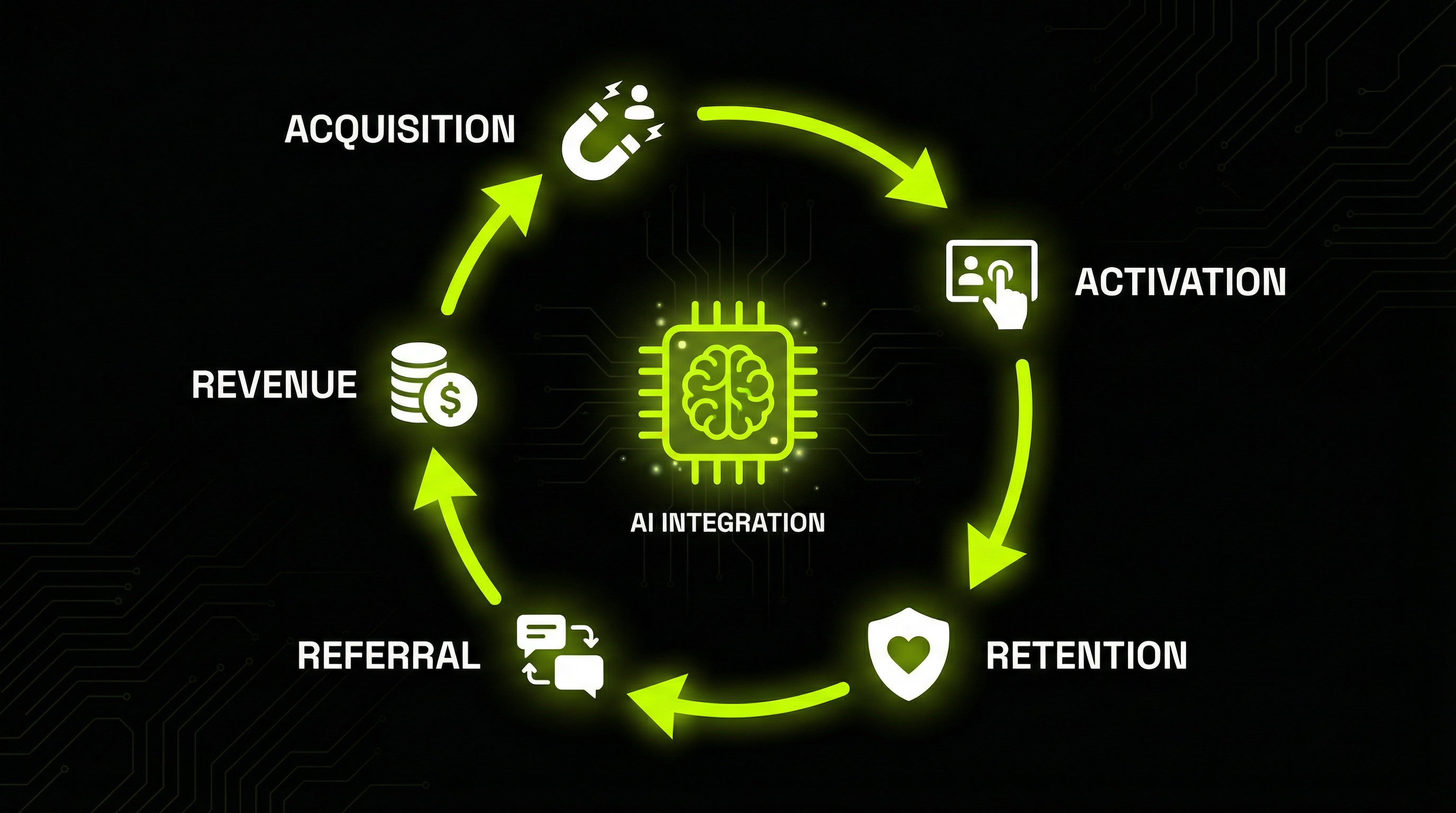
The key difference between growth marketing and traditional marketing lies in its holistic approach. While traditional marketing often stops at generating leads or driving traffic, growth marketing extends through activation, retention, referral, and revenue optimization—commonly known as the AARRR framework or pirate metrics.
The AARRR Framework: Core of Growth Marketing
Understanding the growth marketing funnel is essential for implementing effective strategies. Each stage represents a critical opportunity to optimize and accelerate growth:
- Acquisition: How do users find your product or service? This includes all channels driving new visitors—SEO, paid advertising, social media, content marketing, and referrals.
- Activation: Do users have a great first experience? This measures whether new visitors take meaningful actions that indicate engagement and interest.
- Retention: Do users come back? Retaining customers is more cost-effective than acquiring new ones, making this stage critical for sustainable growth.
- Referral: Do users recommend your product to others? Word-of-mouth and referral programs create organic growth loops that compound over time.
- Revenue: How do you monetize your users? This encompasses pricing optimization, upselling, cross-selling, and maximizing customer lifetime value.
How Growth Marketing Differs from Traditional Marketing
Traditional marketing focuses primarily on brand building and awareness at the top of the funnel. It relies on established channels, creative campaigns, and often measures success through impressions, reach, and brand recall. While valuable, this approach can miss opportunities to optimize the full customer journey.
Growth marketing takes a fundamentally different approach. It treats marketing as a science rather than an art, emphasizing hypothesis testing, data analysis, and rapid iteration. Growth marketers are comfortable with failure because they view it as learning. They run numerous small experiments to identify what works, then scale successful tactics aggressively.
Key Characteristics of Growth Marketing
- Data-Driven Decision Making: Every strategy is backed by data and analytics, not assumptions or intuition.
- Rapid Experimentation: Continuous A/B testing and experimentation drive optimization across all channels.
- Full-Funnel Focus: Equal attention to acquisition, activation, retention, referral, and revenue.
- Cross-Functional Collaboration: Growth teams work across marketing, product, engineering, and customer success.
- Scalable Strategies: Tactics are designed to scale efficiently as the business grows.
Why AI-Powered Marketing Plans Are Essential for Growth
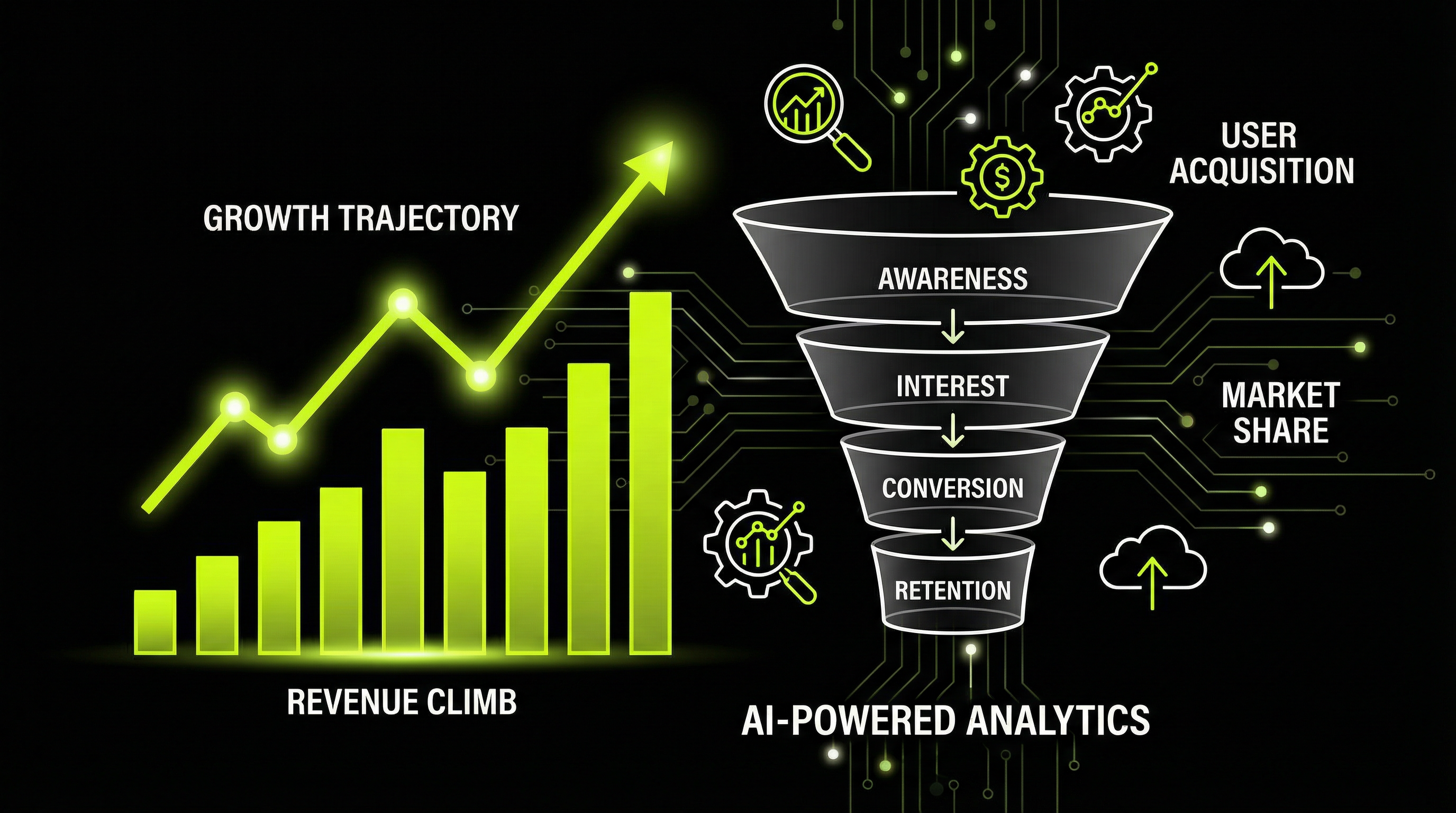
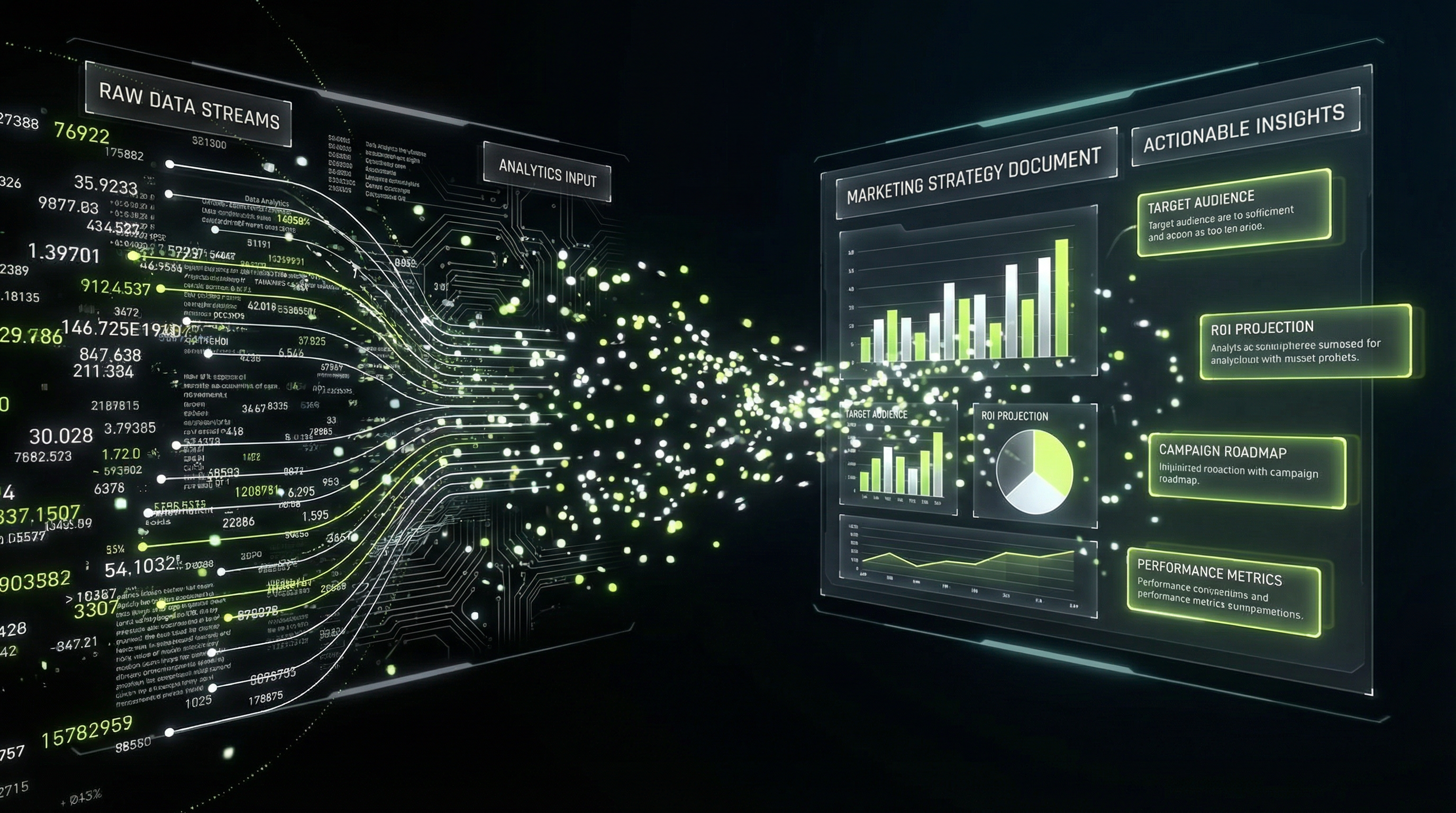
Growth marketing generates vast amounts of data from experiments, customer interactions, and market signals. Processing this information manually is impossible at scale. AI-powered marketing plans bridge this gap by analyzing complex datasets, identifying patterns, and generating actionable strategies in real time.
Accelerated Experimentation
AI dramatically speeds up the testing cycle that is central to growth marketing. Instead of running sequential experiments over weeks, AI can analyze multiple variables simultaneously, predict outcomes, and recommend the most promising tests to prioritize. This acceleration means businesses can identify winning strategies faster and allocate resources more effectively.
Predictive Customer Insights
AI excels at identifying patterns in customer behavior that humans might miss. By analyzing historical data, AI can predict which customers are likely to churn, which prospects are ready to buy, and which users are most likely to become advocates. These predictive insights enable proactive strategies rather than reactive responses.
Personalization at Scale
Growth marketing requires personalized experiences across every touchpoint, but creating individual campaigns for each customer segment is resource-intensive. AI-powered marketing plans automate this personalization, dynamically adjusting messaging, offers, and timing based on individual user behavior and preferences.
Continuous Optimization
Unlike static marketing plans that become outdated quickly, AI-powered plans continuously learn and adapt. As market conditions change, customer preferences shift, and new data becomes available, AI adjusts recommendations automatically. This dynamic approach ensures your growth strategy remains effective even as circumstances evolve.
Implementing AI-Powered Growth Marketing
Getting started with AI-powered growth marketing does not require massive budgets or technical expertise. Modern AI marketing platforms make sophisticated capabilities accessible to businesses of all sizes. Here is how to begin:
- Audit Your Current Funnel: Identify where customers drop off and where the biggest growth opportunities exist.
- Define Growth Metrics: Establish clear KPIs for each stage of the AARRR framework.
- Generate an AI-Powered Plan: Use AI tools to create a comprehensive marketing strategy tailored to your specific business context.
- Implement and Experiment: Execute recommended tactics while running continuous experiments.
- Measure and Iterate: Track results against your metrics and let AI guide ongoing optimizations.
Frequently Asked Questions
What is the difference between growth marketing and growth hacking?
Growth hacking often implies finding quick shortcuts or viral tactics for rapid growth. Growth marketing is a more sustainable, systematic approach that builds long-term growth engines through continuous optimization and experimentation across the entire customer journey.
How long does it take to see results from growth marketing?
Results vary based on your starting point and market, but most businesses see measurable improvements within 30-90 days of implementing a structured growth marketing approach. AI-powered tools can accelerate this timeline by identifying high-impact opportunities faster.
Can small businesses benefit from growth marketing?
Absolutely. Growth marketing principles apply to businesses of all sizes. In fact, small businesses often see proportionally larger gains because they can move faster and implement changes more quickly than larger competitors with more bureaucracy.
The Bottom Line
Growth marketing represents a fundamental shift in how businesses approach customer acquisition and retention. By focusing on the entire customer journey and embracing data-driven experimentation, companies can build sustainable growth engines that compound over time.
AI-powered marketing plans supercharge this approach by analyzing complex data, generating personalized strategies, and continuously optimizing performance. In 2026, the combination of growth marketing principles and AI capabilities is the most powerful formula for business success. Whether you are a startup seeking product-market fit or an established business looking to accelerate growth, AI-powered growth marketing provides the strategic foundation and tactical execution needed to achieve your goals.