Listen to this article
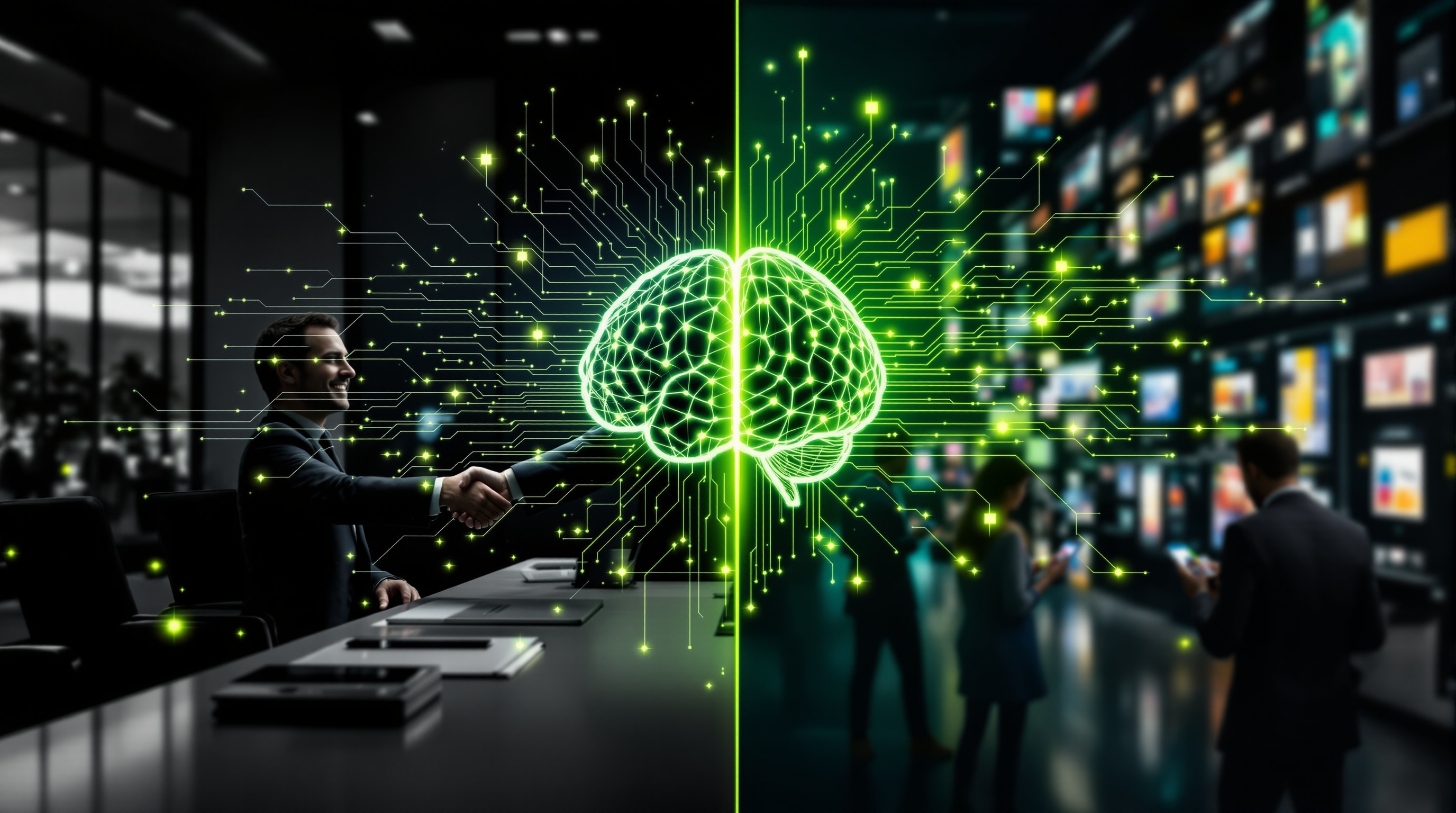
B2B and B2C marketing operate on fundamentally different principles. One sells to decision-making committees over months-long cycles, while the other targets individual consumers who may purchase on impulse. With artificial intelligence reshaping how businesses approach marketing, a critical question emerges: can the same technology effectively serve both worlds? The answer reveals how adaptable AI-powered marketing has become—and where its limitations still matter.
Understanding the Core Differences
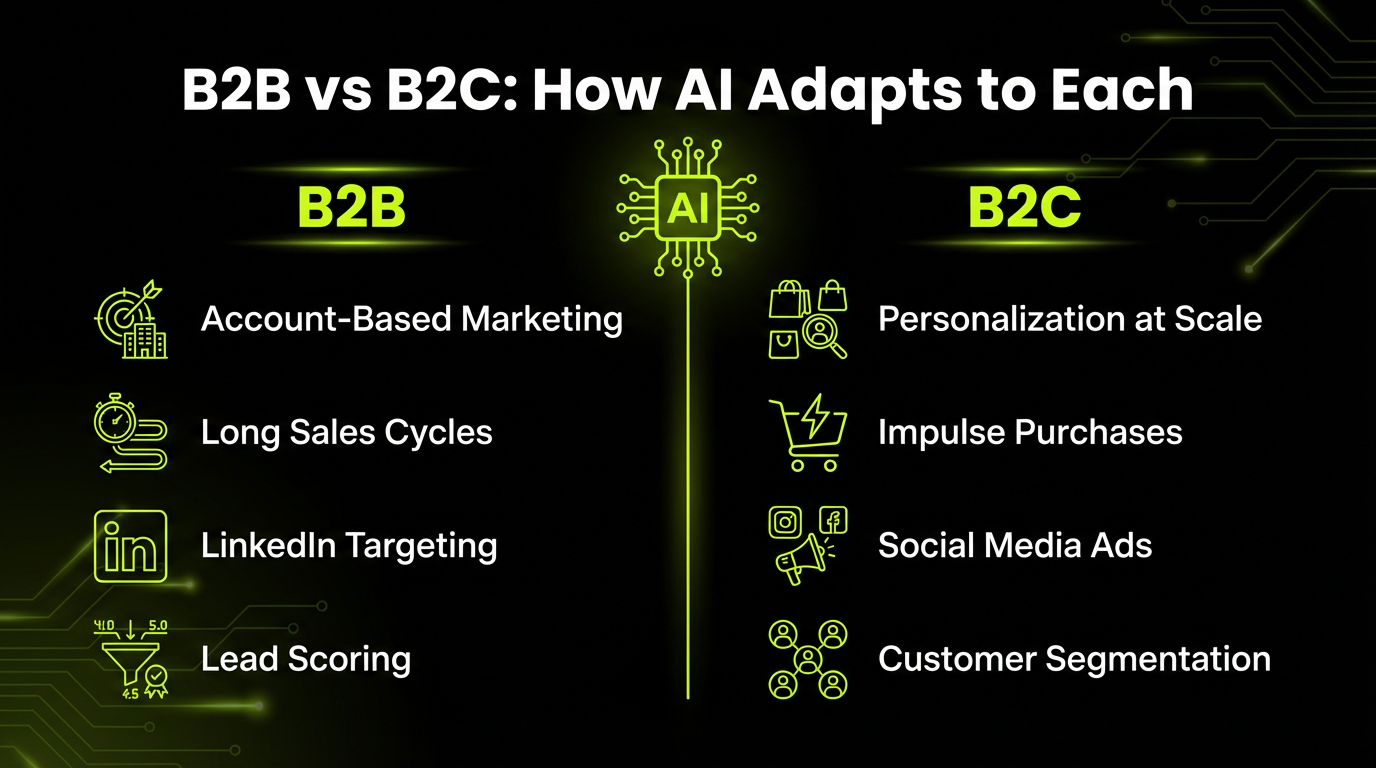
Before evaluating AI's role, it helps to understand what separates these two marketing approaches. B2B marketing targets businesses as buyers, involving multiple stakeholders, longer sales cycles, and decisions driven by logic, ROI analysis, and organizational need. B2C marketing targets individual consumers, relying more heavily on emotion, brand perception, convenience, and price sensitivity.
These differences shape everything from messaging tone and channel selection to content strategy and conversion metrics. A B2B software company nurtures leads through whitepapers, case studies, and LinkedIn outreach. A B2C retailer drives sales through social media ads, influencer partnerships, and personalized email campaigns. AI must adapt to these distinct requirements to be effective in either context.
How AI Serves B2B Marketing
B2B marketing presents unique challenges that AI is increasingly well-equipped to address. The complexity of long sales cycles and multiple decision-makers creates opportunities for intelligent automation and data analysis.
Account-Based Marketing and Lead Scoring
AI can analyze firmographic data, website behavior, and engagement patterns to identify which accounts are most likely to convert. Predictive lead scoring models help sales teams prioritize their outreach, focusing energy on prospects showing genuine buying intent rather than spreading efforts thin across unqualified leads. This data-driven approach can significantly improve the efficiency of B2B sales pipelines.
Content Personalization for Long Sales Cycles
B2B buyers consume substantial content before making purchasing decisions. AI helps map content to specific stages of the buyer journey, recommending relevant case studies, technical documentation, or ROI calculators based on where each prospect stands in the decision-making process. This targeted content delivery can nurture relationships more effectively than generic email sequences.
Sales Intelligence and Forecasting
AI-powered CRM integrations can analyze historical deal data to predict close probabilities, identify at-risk opportunities, and suggest optimal follow-up timing. For small B2B businesses with limited sales teams, these insights help maximize the impact of every interaction.
How AI Serves B2C Marketing
B2C marketing operates at a different scale and speed. AI's ability to process massive datasets and deliver real-time personalization makes it particularly powerful in consumer-facing contexts.
Personalization at Scale
When you're marketing to thousands or millions of individual consumers, personalization becomes both essential and impossible to achieve manually. AI enables dynamic product recommendations, personalized email content, and individualized website experiences based on each customer's browsing history, purchase patterns, and demographic profile. This level of personalization can improve engagement rates and help build customer loyalty.
Social Media and Ad Optimization
B2C brands often rely heavily on paid social media and search advertising. AI tools can continuously test ad variations, adjust bidding strategies, and optimize audience targeting based on real-time performance data. Machine learning algorithms identify which creative elements, copy variations, and targeting parameters drive the best results, helping businesses allocate ad budgets more effectively.
Customer Segmentation and Behavioral Analysis
AI excels at identifying patterns in consumer behavior that humans might miss. By analyzing purchase history, browsing behavior, and engagement data, AI can create detailed customer segments and predict future buying behavior. This enables more targeted campaigns, better inventory planning, and more relevant promotional offers.
Where AI Capabilities Overlap
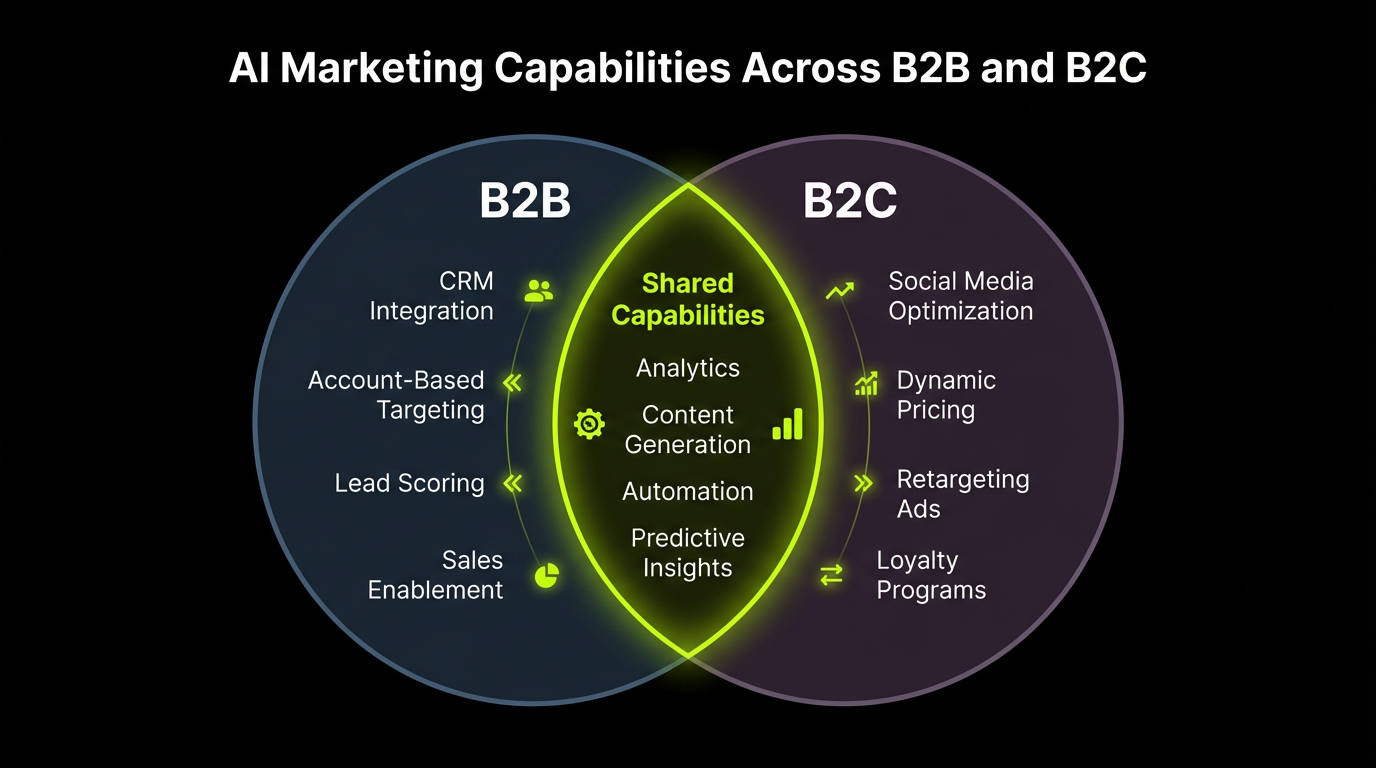
Despite the strategic differences between B2B and B2C, several AI capabilities serve both contexts equally well. Content generation tools can draft blog posts, social media updates, and email copy for any audience—though the tone and complexity will differ. Analytics platforms process engagement data and surface actionable insights regardless of whether the audience is businesses or consumers. Marketing automation handles scheduling, workflow triggers, and follow-up sequences for both models.
Predictive analytics, A/B testing automation, and customer journey mapping are valuable across both B2B and B2C environments. The underlying technology remains the same; what changes is the data being analyzed and the strategic framework guiding the AI's application.
Limitations to Keep in Mind
AI is not a universal solution for every marketing challenge. In B2B contexts, relationship building, trust development, and navigating complex organizational politics still require human expertise. AI can support these efforts with data and insights, but it cannot replace the interpersonal skills that close enterprise deals.
In B2C marketing, AI-generated content may lack the cultural sensitivity, humor, or emotional depth that resonates with consumers on a personal level. Brand building—creating the emotional associations that drive consumer loyalty—remains fundamentally a human creative endeavor. AI tools work best when they augment human decision-making rather than attempt to replace it entirely.
Practical Steps for Small Businesses
Whether your business operates in B2B, B2C, or a hybrid model, integrating AI into your marketing strategy starts with the same foundation. Begin by identifying your most time-consuming repetitive tasks—these are prime candidates for automation. Evaluate your current data collection practices, since AI is only as effective as the data it analyzes. Start with one or two AI tools that address your most pressing challenges before expanding your toolkit.
For B2B businesses, prioritize AI tools that enhance lead qualification and sales pipeline management. For B2C businesses, focus on personalization engines and ad optimization platforms. Regardless of your model, invest time in understanding how AI recommendations are generated so you can make informed decisions about when to follow them and when to rely on your own expertise.
The Verdict: AI Handles Both—Differently
Can AI handle both B2B and B2C marketing? Yes—but not with a one-size-fits-all approach. AI's strength lies in its adaptability. The same underlying technologies—machine learning, natural language processing, predictive analytics—can be configured and trained to serve vastly different marketing objectives. The key is understanding your specific context, choosing tools designed for your marketing model, and maintaining human oversight to ensure AI-driven strategies align with your brand values and business goals.
The businesses that benefit most from AI marketing are those that treat it as an intelligent assistant rather than an autopilot. Whether you're nurturing a six-month B2B sales cycle or driving same-day B2C conversions, AI can help you work smarter—provided you guide it with clear strategy and realistic expectations.
Key Takeaways
- •B2B and B2C marketing require fundamentally different strategies, but AI adapts to serve both effectively.
- •AI excels in B2B through lead scoring, account-based marketing, and sales forecasting.
- •AI powers B2C through personalization at scale, ad optimization, and behavioral segmentation.
- •Core AI capabilities like analytics, content generation, and automation benefit both models equally.
- •Human oversight remains essential—AI augments marketing strategy but cannot replace relationship building or creative brand development.